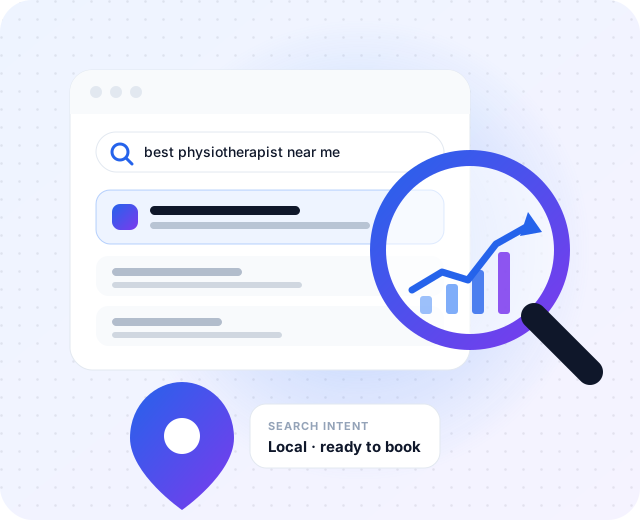
Customers are already searching for what you offer — a treatment, a service, a place nearby. Each search carries intent: someone with a need, actively comparing options. SEO is how your business earns organic visibility in those moments, without paying for every click.
For local businesses, much of that discovery is local: searches with “near me” or a neighbourhood attached. Being found there depends on a solid technical foundation that search engines can crawl and understand, and on content that is genuinely relevant to what people ask — pages, articles, internal links and schema that describe your services clearly.
SEO also compounds. Well-built pages and content keep working long after they are published, which is why it is best treated as long-term discoverability rather than a one-off project. Measurement closes the loop: tracking what is being found, what is growing and where to improve next. No one can guarantee rankings — but consistent, well-measured work improves your chances of being found.
Search behaviour also depends on the device and the moment: someone comparing options on a laptop is in a different frame of mind from someone standing outside a competitor's shop, phone in hand. Both searches matter, and both start with the same groundwork — keyword research that reflects the words your customers actually use, not just the service names you use internally. That research then shapes which pages exist, what each one covers and how they link to each other, so a visitor, and a search engine, can move naturally from a general topic to the specific service they came looking for.